
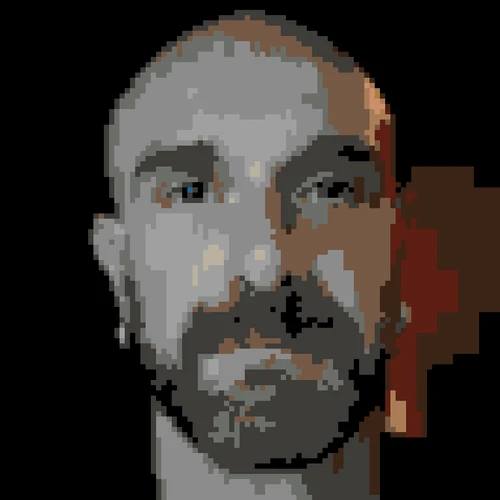
Vitalic, pseudonyme de Pascal Arbez-Nicolas, est un producteur, auteur-compositeur et musicien français né le 18 mai 1976 à Dijon. Formé à la musique classique avant de basculer dans l’électro sous le choc d’un concert de Daft Punk, il s’est imposé comme l’un des artistes majeurs de la scène électronique française. Reconnu autant pour ses albums studio que pour ses concerts électrisants, il a contribué à légitimer le live électronique aux côtés de figures comme Daft Punk ou Justice.
Pascal Arbez-Nicolas grandit à Dijon, où il étudie l’anglais, le russe et la musique classique, apprenant le trombone dès l’âge de huit ans à la demande de son père. Le choc d’un concert de Daft Punk au club l’An-Fer, au début des années 1990, le détourne définitivement des partitions classiques pour l’orienter vers la composition électronique. Il publie dès 1996 ses premiers morceaux de façon autoproduite, sous différents pseudonymes tels que Dima ou Vital & Al Ferox, ce dernier alias en collaboration avec Alessandro Farace. Sa rencontre avec Michel Amato, alias The Hacker, cofondateur du label Goodlife, au Rex Club à Paris, lui permet d’entrer en contact avec Helmut Geier, alias DJ Hell, fondateur du label allemand International Deejay Gigolo Records. Celui-ci publie en 2001 le Poney EP sous le nom de Vitalic, qui devient rapidement le disque le plus vendu du label. La même année, Vitalic fonde son propre label, Citizen Records, sur lequel il signe notamment Lady B, Teenage Bad Girl et The Micronauts.
Le style musical de Vitalic se distingue par un mélange singulier de techno, d’électro, de house et de rock, enrichi d’éléments empruntés à la musique classique, à l’italo-disco et à l’électronique des années 1970. Sa musique alterne nappes de synthétiseur mélancoliques et rêveuses, rappelant Jean-Michel Jarre, et riffs de machines puissants proches du rock, souvent accompagnés de voix vocodées héritées de l’électro discofunk. Son premier album, entièrement composé à partir de sons synthétiques sans instruments réels, reflète cette approche : recréer l’énergie du rock et l’émotion d’un groupe live à l’aide de moyens exclusivement électroniques. Producteur en perpétuelle réinvention, il assume avec la même intensité des influences pop, punk et disco.
Parmi ses jalons discographiques majeurs figure le titre La Rock 01, extrait du Poney EP (2001), qui connaît un succès sur les pistes de danse européennes et se voit remixé par Sven Väth. Son premier album, OK Cowboy, paraît en 2005 sur le label Different/PIAS et étend sa notoriété du circuit électro à la presse internationale, lui permettant de tourner aux États-Unis. Il publie en 2007 l’album live V – Live, puis confirme son aura en 2009 avec Flashmob, qui atteint la vingt-troisième place des ventes en France et reçoit un accueil critique favorable, notamment de la part de Pitchfork. Depuis 2019, il forme avec la musicienne Rebeka Warrior le duo Kompromat, avec lequel il célèbre vingt ans de carrière et annonce l’album Dissidænce. Remixeur recherché, il a notamment retravaillé des titres de Daft Punk, Björk, Röyksopp, Paul Kalkbrenner, Indochine et Étienne Daho, confirmant sa place centrale dans la scène électronique française et internationale.
Vitalic, the stage name of Pascal Arbez-Nicolas, is a French producer, songwriter and musician born on May 18, 1976, in Dijon. Trained in classical music before turning to electronic sound after a formative Daft Punk concert, he has established himself as one of the leading figures of the French electronic music scene. Recognized both for his studio albums and his electrifying live shows, he has helped legitimize electronic live performance alongside figures such as Daft Punk and Justice.
Pascal Arbez-Nicolas grew up in Dijon, where he studied English, Russian and classical music, learning the trombone from the age of eight at his father’s request. A formative Daft Punk concert at the club l’An-Fer in the early 1990s permanently steered him away from classical sheet music and toward electronic composition. As early as 1996 he began releasing self-produced tracks under various pseudonyms, including Dima and Vital & Al Ferox, the latter in collaboration with Alessandro Farace. Meeting Michel Amato, known as The Hacker and co-founder of the label Goodlife, at the Rex Club in Paris, allowed him to connect with Helmut Geier, known as DJ Hell, founder of the German label International Deejay Gigolo Records. In 2001, the label released the Poney EP under the name Vitalic, which quickly became its best-selling record. That same year, Vitalic founded his own label, Citizen Records, on which he signed artists including Lady B, Teenage Bad Girl and The Micronauts.
Vitalic’s musical style is marked by a distinctive blend of techno, electro, house and rock, enriched with elements borrowed from classical music, Italo disco and 1970s electronic music. His sound alternates between melancholic, dreamlike synthesizer textures reminiscent of Jean-Michel Jarre and powerful, rock-like machine riffs, often paired with vocoded vocals inherited from disco-funk electro. His debut album, composed entirely of synthetic sounds without real instruments, reflects this approach: recreating the energy of rock and the emotion of a live band using purely electronic means. A producer in constant reinvention, he embraces pop, punk and disco influences with equal intensity.
Among his major discographic milestones is the track « La Rock 01, » taken from the Poney EP (2001), which became a European dancefloor hit and was remixed by Sven Väth. His debut album, OK Cowboy, was released in 2005 on the label Different/PIAS and extended his reputation from the electro underground to the international press, enabling him to tour the United States. He released the live album V – Live in 2007, then confirmed his standing in 2009 with Flashmob, which reached number twenty-three on the French sales charts and received favorable critical reception, notably from Pitchfork. Since 2019 he has formed the duo Kompromat with musician Rebeka Warrior, with which he marked twenty years of his career and announced the album Dissidænce. A sought-after remixer, he has reworked tracks by Daft Punk, Björk, Röyksopp, Paul Kalkbrenner, Indochine and Étienne Daho, confirming his central place within the French and international electronic music scene.