

- Good Times Bad Times
- Communication Breakdown
- Dazed and Confused
- Babe I’m Gonna Leave You
- Whole Lotta Love
- Ramble On
- Heartbreaker
- Immigrant Song
- Since I’ve Been Loving You
- Rock and Roll
- Black Dog
- When the Levee Breaks
- Stairway to Heaven
- The Song Remains the Same
- Over the Hills and Far Away
- D’yer Mak’er
- No Quarter
- Trampled Under Foot
- Houses of the Holy
- Kashmir
- Nobody’s Fault but Mine
- Achilles Last Stand
- In the Evening
- All My Love
Mothership est un album compilation du groupe britannique Led Zeppelin, publié le 12 novembre 2007 au Royaume-Uni et le 13 novembre 2007 aux États-Unis sur Atlantic Records et Rhino Entertainment. Réunissant vingt-quatre titres choisis par les membres survivants du groupe, Jimmy Page, Robert Plant et John Paul Jones, parmi leurs huit albums studio, la compilation s’accompagne d’une pochette signée par l’artiste américain Shepard Fairey. Sorti le jour même où l’ensemble du catalogue de Led Zeppelin devenait disponible en téléchargement légal, Mothership s’est imposé comme l’une des compilations rock les plus vendues de la fin des années 2000.
Mothership naît du projet de proposer, plus de vingt-cinq ans après la séparation de Led Zeppelin, une porte d’entrée synthétique dans la discographie du groupe. La sélection des vingt-quatre titres, répartis sur deux disques, est effectuée personnellement par Jimmy Page, Robert Plant et John Paul Jones, membres survivants du groupe après la mort du batteur John Bonham en 1980. La sortie de l’album coïncide, le 13 novembre 2007, avec la mise à disposition de l’intégralité du catalogue de Led Zeppelin sur les plateformes de téléchargement légal, dont iTunes Store, un événement accompagné du lancement temporaire d’une station de radio satellite dédiée, XM Led. Pour l’habillage visuel du projet, la maison de disques confie la direction artistique et le design de la pochette à Shepard Fairey, artiste américain déjà connu sous le pseudonyme Obey Giant pour son travail d’affichiste et de street artist. L’album est complété par des notes de pochette signées par le journaliste David Fricke et par une iconographie puisant dans les archives photographiques du groupe, sous la supervision de Peter Grant, ancien manager historique de Led Zeppelin, crédité en production exécutive.
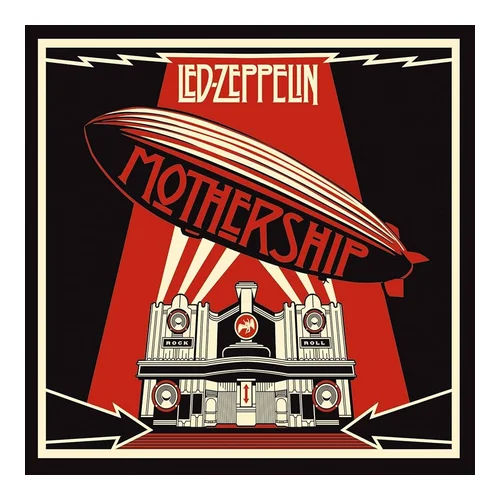
Sur le plan musical, Mothership retrace l’évolution de Led Zeppelin à travers ses huit albums studio, du blues-rock brut des débuts, avec Good Times Bad Times ou Communication Breakdown, jusqu’aux compositions plus épiques de la fin des années 1970, telles que Achilles Last Stand ou In the Evening. La sélection alterne titres emblématiques du grand public, comme Stairway to Heaven, Whole Lotta Love ou Kashmir, et morceaux plus atmosphériques comme No Quarter ou When the Levee Breaks, retraçant la diversité stylistique du groupe entre hard rock, folk, blues et influences orientales ou reggae. Sur le plan graphique, la pochette conçue par Shepard Fairey adopte une esthétique de sérigraphie en rouge et noir, dans la continuité du style affichiste, contrasté et inspiré de la propagande visuelle, qui a fait la réputation de l’artiste. L’image représente un dirigeable stylisé survolant un bâtiment de style art déco, une évocation directe du nom de l’album et une référence au surnom donné à l’avion privé du groupe dans les années 1970, le Starship. Cette identité visuelle tranche avec les pochettes originales, souvent picturales ou symboliques, des albums studio de Led Zeppelin, tout en s’inscrivant dans la continuité de leur goût pour une imagerie mystique et évocatrice.
À sa sortie, Mothership reçoit un accueil critique largement favorable dans la presse musicale, plusieurs publications saluant la pertinence de la sélection opérée par les membres du groupe ainsi que la qualité de la remasterisation. Sur le plan commercial, l’album débute à la quatrième place du classement britannique avec 58 000 exemplaires vendus la première semaine, et à la septième place du Billboard 200 aux États-Unis avec environ 136 000 exemplaires écoulés sur la même période. Il atteint également la première place des classements en Norvège et en Pologne, et se maintient plusieurs semaines en tête des ventes en Nouvelle-Zélande. Aux États-Unis, l’album est certifié double disque de platine par la RIAA, avec plus de 2,1 millions d’exemplaires vendus, pour un total mondial estimé à environ 4,5 millions de copies. La pochette signée Shepard Fairey contribue à la notoriété visuelle de l’album, régulièrement citée parmi les compilations les mieux habillées du genre, et a fait l’objet d’éditions en sérigraphie limitée vendues séparément. Mothership demeure aujourd’hui l’une des compilations de référence du catalogue de Led Zeppelin, régulièrement recommandée comme point d’entrée dans la discographie du groupe.
Mothership is a compilation album by the British band Led Zeppelin, released on 12 November 2007 in the United Kingdom and 13 November 2007 in the United States on Atlantic Records and Rhino Entertainment. Bringing together twenty-four tracks selected by the band’s surviving members, Jimmy Page, Robert Plant and John Paul Jones, from their eight studio albums, the compilation features cover art by American artist Shepard Fairey. Released on the same day Led Zeppelin’s entire catalogue became available for legal download, Mothership became one of the best-selling rock compilations of the late 2000s.
Mothership grew out of a plan to offer, more than twenty-five years after Led Zeppelin’s split, a synthetic entry point into the band’s discography. The selection of twenty-four tracks, spread across two discs, was made personally by Jimmy Page, Robert Plant and John Paul Jones, the surviving members of the band following drummer John Bonham’s death in 1980. The album’s release coincided, on 13 November 2007, with the release of Led Zeppelin’s entire catalogue on legal download platforms, including the iTunes Store, an event accompanied by the launch of a temporary satellite radio station, XM Led. For the project’s visual identity, the label entrusted art direction and sleeve design to Shepard Fairey, an American artist already known under the alias Obey Giant for his poster and street-art work. The album is rounded out by liner notes written by journalist David Fricke and by imagery drawn from the band’s photographic archives, overseen by Peter Grant, Led Zeppelin’s longtime former manager, credited as executive producer.
Musically, Mothership traces Led Zeppelin’s evolution across its eight studio albums, from the raw blues-rock of the early years, with Good Times Bad Times and Communication Breakdown, to the more epic compositions of the late 1970s, such as Achilles Last Stand and In the Evening. The selection alternates between widely known staples, such as Stairway to Heaven, Whole Lotta Love and Kashmir, and more atmospheric pieces like No Quarter and When the Levee Breaks, charting the band’s stylistic range across hard rock, folk, blues and Eastern or reggae influences. Visually, the sleeve designed by Shepard Fairey adopts a red-and-black screenprint aesthetic, in keeping with the high-contrast, propaganda-inspired poster style that made the artist’s name. The image depicts a stylized airship soaring over an art-deco building, a direct nod to the album’s title and a reference to the nickname given to the band’s private plane in the 1970s, the Starship. This visual identity contrasts with the often pictorial or symbolic original sleeves of Led Zeppelin’s studio albums, while remaining true to the band’s taste for mystical, evocative imagery.
On release, Mothership received largely favorable reviews from the music press, with several publications praising the relevance of the track selection made by the band’s members as well as the quality of the remastering. Commercially, the album debuted at number four on the UK chart with 58,000 copies sold in its first week, and at number seven on the US Billboard 200 with roughly 136,000 copies sold over the same period. It also reached number one on the charts in Norway and Poland, and stayed at the top of the sales charts in New Zealand for several weeks. In the United States, the album was certified double platinum by the RIAA, with over 2.1 million copies sold, for an estimated worldwide total of around 4.5 million copies. Shepard Fairey’s sleeve contributed to the album’s visual reputation, regularly cited among the best-designed compilations of its kind, and was later issued as limited-edition screenprints sold separately. Mothership remains today one of the reference compilations in Led Zeppelin’s catalogue, routinely recommended as an entry point into the band’s discography.