
- Roche
- Kilometer
- Look
- Divine
- Pomme
- Une Heure
- Sexual Sportswear
- Elle
- Fingers of Steel
- Manty
- L’Amour et la Violence
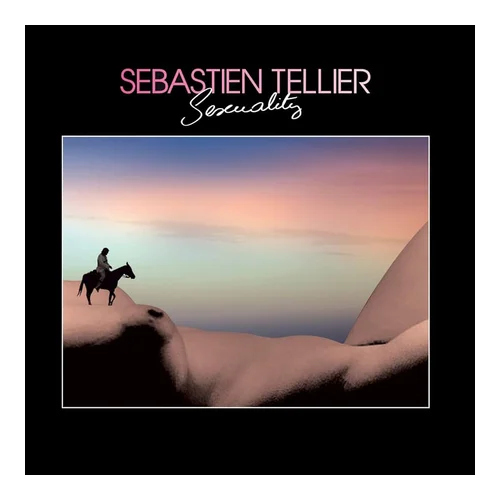
Sexuality est le troisième album studio du chanteur et producteur français Sébastien Tellier, sorti le 25 février 2008 sur les labels Record Makers et Lucky Number Music. Il s’agit du premier album de l’artiste produit par une tierce personne, en l’occurrence Guy-Manuel de Homem-Christo, membre de Daft Punk. Centré entièrement sur le thème de la sexualité, l’album prolonge une trilogie thématique entamée par Tellier avec L’Incroyable Vérité et Politics. Porté par le single Divine, qui représentera la France à l’Eurovision 2008, Sexuality s’impose comme l’un des albums français les plus commentés de la fin des années 2000.
Sexuality naît d’une rencontre entre Sébastien Tellier et Guy-Manuel de Homem-Christo, qui s’étaient déjà croisés lors de la production du film Daft Punk’s Electroma, pour lequel Daft Punk avait sollicité l’usage du morceau Universe de Tellier. Flatté par la proposition de produire l’album, de Homem-Christo accepte, se disant convaincu que Tellier compte parmi les meilleurs auteurs-compositeurs français du moment. L’album est co-produit par Eric Chédeville et bénéficie également de la participation d’Amandine de La Richardière, compagne de l’artiste à l’époque, qui contribue à l’écriture de plusieurs titres, dont Divine. Le premier extrait dévoilé, Sexual Sportswear, est mis en ligne sur la page Myspace de Tellier avant la sortie de l’album. Sébastien Tellier explique avoir voulu consacrer un disque entier à la sexualité après avoir centré ses deux précédents albums sur la famille (L’Incroyable Vérité, 2001) puis sur la politique (Politics, 2004), considérant que le sexe finit par dominer l’ensemble des rapports humains. L’album paraît le 25 février 2008 sur le label indépendant Record Makers, cofondé par Tellier lui-même, et sur Lucky Number Music.
Sexuality développe une esthétique électronique et synthétique que Sébastien Tellier qualifie lui-même de R&B intellectuel, revendiquant une inspiration latine et italienne plutôt qu’américaine dans son approche de la musique sensuelle. L’artiste insiste sur la volonté de tenir la vulgarité à distance du sujet traité, préférant une forme de séduction mélancolique, incarnée par la figure du grand séducteur au cœur brisé. La production signée Guy-Manuel de Homem-Christo tranche nettement avec le son de Daft Punk, privilégiant des synthétiseurs planants, des rythmiques électroniques feutrées et des arrangements empruntant autant à la pop qu’à la musique électronique expérimentale. Le titre Sexual Sportswear, instrumental de plus de sept minutes, illustre cette rencontre entre l’univers de Tellier et celui de son producteur. Divine, single le plus identifiable de l’album, associe synth-pop et electronica dans une chanson en anglais ponctuée de quelques vers en français. L’ensemble alterne morceaux chantés, comme Roche, Look ou Manty, et pistes plus instrumentales ou atmosphériques, installant une tonalité à la fois froide et sensuelle sur l’ensemble du disque.
À sa sortie, Sexuality reçoit un accueil critique contrasté mais globalement positif dans la presse anglo-saxonne : le magazine NME lui attribue une note de 8/10, quand Pitchfork le crédite de 7,3/10 et que Drowned in Sound se montre plus réservé avec une note de 6/10. AllMusic et The Guardian consacrent également des critiques à l’album lors de sa sortie. Le single Divine bénéficie d’une exposition particulière lorsqu’il est choisi pour représenter la France au Concours Eurovision de la Chanson 2008, à Belgrade, où Sébastien Tellier interprète le titre en anglais, ponctué de quelques vers en français, lors d’une performance remarquée incluant l’usage d’une voiturette de golf et d’un ballon gonflé à l’hélium. La chanson termine 19e sur 25 avec 47 points, un résultat modeste au regard de l’exposition médiatique suscitée par le choix d’un titre majoritairement anglophone, débat qui est allé jusqu’à être évoqué au Parlement français. Sexuality est aujourd’hui considéré comme l’un des albums les plus marquants de la discographie de Sébastien Tellier et a fait l’objet, en 2010, d’un album de remixes intitulé Sexuality Remix, confirmant sa postérité dans les scènes électronique et pop françaises.
Sexuality is the third studio album by French singer and producer Sébastien Tellier, released on 25 February 2008 on the labels Record Makers and Lucky Number Music. It is the first album by the artist produced by someone other than himself, namely Guy-Manuel de Homem-Christo, a member of Daft Punk. Built entirely around the theme of sexuality, the album continues a thematic trilogy Tellier began with L’Incroyable Vérité and Politics. Carried by the single Divine, which would go on to represent France at Eurovision 2008, Sexuality became one of the most talked-about French albums of the late 2000s.
Sexuality grew out of a meeting between Sébastien Tellier and Guy-Manuel de Homem-Christo, who had already crossed paths during the production of the film Daft Punk’s Electroma, for which Daft Punk had requested the use of Tellier’s track Universe. Flattered by the offer to produce the album, de Homem-Christo agreed, describing Tellier as among the best songwriters in France at the time. The album was co-produced by Eric Chédeville and also features contributions from Amandine de La Richardière, the artist’s partner at the time, who helped write several tracks, including Divine. The first track revealed, Sexual Sportswear, was posted on Tellier’s Myspace page ahead of the album’s release. Tellier explained that he wanted to devote an entire record to sexuality after centering his two previous albums on family (L’Incroyable Vérité, 2001) and then politics (Politics, 2004), having come to see sex as the force underlying most human relationships. The album was released on 25 February 2008 on the independent label Record Makers, co-founded by Tellier himself, and on Lucky Number Music.
Sexuality develops an electronic, synth-driven aesthetic that Tellier himself described as intellectual R&B, claiming a Latin and Italian influence rather than an American one in its approach to sensual music. The artist emphasized his wish to keep vulgarity out of the subject matter, favoring a melancholic form of seduction embodied by the figure of the great heartbroken seducer. Guy-Manuel de Homem-Christo’s production departs sharply from the Daft Punk sound, favoring drifting synthesizers, hushed electronic rhythms and arrangements that borrow as much from pop as from experimental electronic music. The track Sexual Sportswear, an instrumental running over seven minutes, illustrates this meeting between Tellier’s world and that of his producer. Divine, the album’s most recognizable single, blends synth-pop and electronica in a song sung mostly in English with a few lines in French. The record alternates sung tracks, such as Roche, Look and Manty, with more instrumental or atmospheric pieces, establishing a tone that is at once cold and sensual across the whole album.
On release, Sexuality received a mixed but broadly positive critical reception in the English-language press: NME gave it 8/10, Pitchfork rated it 7.3/10, and Drowned in Sound was more reserved with a score of 6/10. AllMusic and The Guardian also reviewed the album on release. The single Divine gained particular exposure when it was chosen to represent France at the Eurovision Song Contest 2008 in Belgrade, where Tellier performed the song in English, with a few lines in French, in a performance notable for its use of a golf cart and a helium-filled balloon. The song finished 19th out of 25 with 47 points, a modest result given the media attention drawn by the choice of a mostly English-language entry, a debate that even reached the French Parliament. Sexuality is today regarded as one of the most significant albums in Sébastien Tellier’s discography and was followed in 2010 by a remix album titled Sexuality Remix, confirming its lasting influence on the French electronic and pop scenes.