
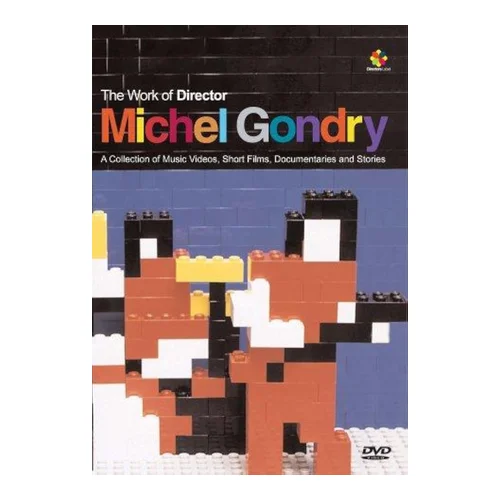


Le titre complet du coffret est The Work of Director Michel Gondry, publié en 2003 par Palm Pictures et distribué par WEA aux États-Unis (28 octobre 2003), comme troisième volume de la série documentaire Directors Label, aux côtés des volumes consacrés à Spike Jonze et Chris Cunningham. Le disque double face retrace le parcours du réalisateur français à travers vingt-sept clips, plusieurs publicités, un court métrage et un long featurette biographique. Il met en lumière l’univers visuel de Gondry, mêlant animation artisanale, effets pratiques et récits oniriques, dans le sillage de son travail avec Björk et de nombreux autres artistes.
Le DVD rassemble les clips musicaux réalisés par Michel Gondry pour Björk, The White Stripes, The Chemical Brothers, Kylie Minogue, Daft Punk, Foo Fighters, Beck, Cibo Matto, The Rolling Stones, Massive Attack, ainsi que des travaux plus anciens pour I Am, Jean-François Coen et pour son propre groupe Oui Oui. S’y ajoutent trois publicités (Levi’s, Smirnoff, Polaroid), le court métrage Pecan Pie avec Jim Carrey, et des séquences filmées en concert d’Oui Oui à la tour Eiffel. La pièce centrale du coffret est le featurette documentaire « I’ve Been 12 Forever », divisé en deux parties pour une durée totale d’environ 75 minutes, qui combine interviews de Gondry, de ses collaborateurs artistiques et de proches, images de tournage, story-boards et dessins du réalisateur.
Le projet s’inscrit dans le lancement de la série Directors Label, initiée conjointement par Michel Gondry, Chris Cunningham et Spike Jonze pour valoriser le clip musical comme forme cinématographique à part entière. Le coffret est accompagné d’un livret de 52 pages, également intitulé « I’ve Been 12 Forever », réunissant récits, dessins, photographies et entretiens du réalisateur. Le featurette documentaire a été coréalisé avec la participation de Lance Bangs et d’Olivier Gondry, frère du réalisateur. Le clip de Radiohead pour « Knives Out », bien qu’annoncé dans les bandes-annonces promotionnelles du coffret, a finalement été omis de l’édition finale sans explication documentée ; il figurera plus tard sur d’autres compilations. La sortie du DVD accompagne la reconnaissance croissante de Gondry, alors en parallèle de son passage au long métrage avec Human Nature puis Eternal Sunshine of the Spotless Mind.
L’accueil critique a été particulièrement favorable, la presse spécialisée saluant la cohérence de l’univers visuel de Gondry, ses thèmes récurrents (dédoublements, rêves, animation image par image) et la qualité du featurette biographique, jugé riche en informations sur son processus créatif malgré une part plus réduite consacrée à sa vie personnelle. Des clips comme « Bachelorette » de Björk, « Everlong » des Foo Fighters ou l’animation en Lego de « Fell in Love with a Girl » des White Stripes ont été identifiés comme des sommets de la compilation. Aucune récompense spécifique attribuée au coffret lui-même n’a pu être confirmée ; les distinctions documentées concernent les clips pris individuellement. Le DVD occupe une place de référence dans la reconnaissance critique du travail de Michel Gondry et dans l’histoire éditoriale du clip musical en tant que genre.
The full title of the collection is The Work of Director Michel Gondry, released in 2003 by Palm Pictures and distributed by WEA in the United States (October 28, 2003), as the third volume of the Directors Label documentary series, alongside the volumes dedicated to Spike Jonze and Chris Cunningham. The double-sided disc traces the French director’s career through twenty-seven music videos, several commercials, a short film, and a long-form biographical featurette. It highlights Gondry’s visual world, blending handcrafted animation, practical effects, and dreamlike storytelling, largely built through his work with Björk and numerous other artists.
The DVD compiles music videos directed by Michel Gondry for Björk, The White Stripes, The Chemical Brothers, Kylie Minogue, Daft Punk, Foo Fighters, Beck, Cibo Matto, The Rolling Stones, and Massive Attack, alongside earlier work for I Am, Jean-François Coen, and his own band Oui Oui. Also included are three commercials (Levi’s, Smirnoff, Polaroid), the short film Pecan Pie starring Jim Carrey, and live concert footage of Oui Oui at the Eiffel Tower. The centerpiece of the set is the documentary featurette « I’ve Been 12 Forever, » split into two parts for a total runtime of about 75 minutes, combining interviews with Gondry, his artistic collaborators, and family members, behind-the-scenes footage, storyboards, and the director’s own drawings.
The project marked the launch of the Directors Label series, co-created by Michel Gondry, Chris Cunningham, and Spike Jonze to establish the music video as a cinematic form in its own right. The collection comes with a 52-page book, also titled « I’ve Been 12 Forever, » gathering stories, drawings, photographs, and interviews from the director. The documentary featurette was co-directed with contributions from Lance Bangs and Olivier Gondry, the director’s brother. Radiohead’s video for « Knives Out, » though featured in the collection’s promotional trailers, was ultimately omitted from the final DVD with no documented explanation; it would later appear on other compilations. The DVD’s release coincided with Gondry’s growing recognition as he moved into feature filmmaking with Human Nature and later Eternal Sunshine of the Spotless Mind.
Critical reception was particularly favorable, with specialized press praising the coherence of Gondry’s visual world, his recurring themes (doubling, dreams, stop-motion animation), and the depth of the biographical featurette, which was noted for its insight into his creative process despite offering a more limited look at his personal life. Videos such as Björk’s « Bachelorette, » Foo Fighters’ « Everlong, » and the Lego stop-motion animation of The White Stripes’ « Fell in Love with a Girl » were singled out as highlights of the collection. No award specifically attributed to the collection itself could be confirmed; documented distinctions apply to individual videos rather than the release as a whole. The DVD holds a reference position in the critical recognition of Michel Gondry’s work and in the editorial history of the music video as a genre.