
- Sunday Morning
- I’m Waiting for the Man
- Femme Fatale
- Venus in Furs
- Run Run Run
- All Tomorrow’s Parties
- Heroin
- There She Goes Again
- I’ll Be Your Mirror
- The Black Angel’s Death Song
- European Son
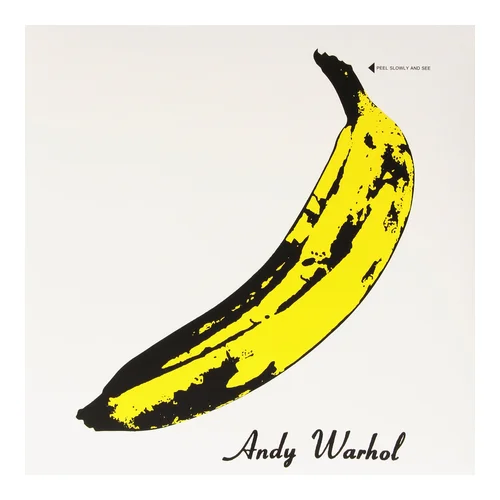
The Velvet Underground & Nico est l’album fondateur du groupe new-yorkais The Velvet Underground, enregistré avec la chanteuse allemande Nico et publié en mars 1967 sur le label Verve Records. Porté par Lou Reed et John Cale, l’album se distingue par un rock brut et expérimental, mêlé à des thématiques crues (drogue, sadomasochisme, vie urbaine). Sa pochette, conçue par Andy Warhol autour d’une banane à peler, est devenue l’une des images les plus reconnaissables de l’histoire du rock, incarnant la rencontre entre musique underground et pop art.
L’album prend forme au sein de la Factory d’Andy Warhol, alors que le groupe se produit dans le cadre de l’Exploding Plastic Inevitable, série de spectacles multimédias organisés par l’artiste. L’essentiel des sessions se déroule en avril 1966 au Scepter Studios de New York, financé par Warhol et le cadre de Columbia Records Norman Dolph, avant que trois titres ne soient réenregistrés en Californie et qu’un dernier morceau, Sunday Morning, ne soit ajouté en novembre 1966 aux Mayfair Recording Studios. Warhol est crédité comme producteur, mais son rôle réel reste débattu : plusieurs sources désignent plutôt Tom Wilson, producteur chez Verve, comme véritable artisan technique du disque, tandis que John Cale est associé aux arrangements musicaux. C’est également Warhol qui impose Nico au groupe, contre l’avis initial de Lou Reed, et qui conçoit la pochette illustrée par sa célèbre peinture de banane, avec un autocollant à peler dévoilant un fruit rose sur les premiers pressages.
Musicalement, l’album marie une pop minimaliste (Sunday Morning, Femme Fatale) à des morceaux plus abrasifs et expérimentaux, portés par l’alto électrique de John Cale et une instrumentation volontairement rugueuse (Venus in Furs, European Son). Les voix de Nico, employée sur trois titres et sur les chœurs de Sunday Morning, apportent un timbre grave et détaché qui contraste avec le chant de Lou Reed. Les textes, signés principalement par ce dernier, abordent sans détour des sujets alors tabous dans la musique populaire. Sur le plan visuel, la pochette de Warhol, réduite à une simple banane jaune sur fond blanc, reprend les codes du pop art en les transposant à l’objet disque, brouillant la frontière entre œuvre plastique et produit de consommation.
À sa sortie, l’album est un échec commercial : plusieurs disquaires refusent de le vendre, des radios refusent de le diffuser, et Verve peine à en assurer la promotion. Le disque est même brièvement retiré de la vente en juin 1967 à la suite d’une action en justice liée à l’utilisation non autorisée d’une photographie sur la pochette. Il ne dépasse pas la 171e place des classements Billboard. Sa reconnaissance critique est tardive mais considérable : il figure depuis parmi les albums les plus influents de l’histoire du rock, classé 13e par Rolling Stone dans sa liste des 500 plus grands albums de tous les temps, et inscrit au National Recording Registry de la Bibliothèque du Congrès américain en 2006. Son influence sur le rock alternatif, le punk et l’art-rock est aujourd’hui largement documentée.
The Velvet Underground & Nico is the founding album of the New York band The Velvet Underground, recorded with German singer Nico and released in March 1967 on Verve Records. Led by Lou Reed and John Cale, the album stands out for its raw, experimental rock sound combined with blunt subject matter (drugs, sadomasochism, urban life). Its cover, designed by Andy Warhol around a peelable banana, has become one of the most recognizable images in rock history, embodying the meeting point between underground music and pop art.
The album took shape within Andy Warhol’s Factory, as the band performed as part of the Exploding Plastic Inevitable, a series of multimedia shows organized by the artist. Most of the sessions took place in April 1966 at Scepter Studios in New York, financed by Warhol and Columbia Records executive Norman Dolph, before three tracks were re-recorded in California and a final song, Sunday Morning, was added in November 1966 at Mayfair Recording Studios. Warhol is credited as producer, but his actual role remains debated: several sources instead point to Tom Wilson, a Verve staff producer, as the record’s true technical architect, while John Cale is associated with the musical arrangements. It was also Warhol who brought Nico into the band, against Lou Reed’s initial wishes, and who designed the cover art around his famous banana painting, with a peel-off sticker revealing a pink fruit underneath on early pressings.
Musically, the album blends minimalist pop (Sunday Morning, Femme Fatale) with more abrasive, experimental tracks driven by John Cale’s electric viola and deliberately raw instrumentation (Venus in Furs, European Son). Nico’s vocals, featured on three songs and on the backing vocals of Sunday Morning, bring a deep, detached tone that contrasts with Lou Reed’s singing. The lyrics, mostly written by Reed, tackle subjects that were then taboo in popular music without euphemism. Visually, Warhol’s cover art, reduced to a simple yellow banana on a white background, transposes pop art conventions onto the record as an object, blurring the line between artwork and consumer product.
Upon release, the album was a commercial failure: several record stores refused to stock it, radio stations declined to play it, and Verve struggled to promote it. The record was even briefly pulled from sale in June 1967 following a lawsuit over the unauthorized use of a photograph on the cover. It never rose above number 171 on the Billboard charts. Critical recognition came later but proved substantial: the album now ranks among the most influential in rock history, placed 13th on Rolling Stone’s list of the 500 Greatest Albums of All Time, and added to the U.S. Library of Congress’s National Recording Registry in 2006. Its influence on alternative rock, punk and art-rock is now widely documented.