
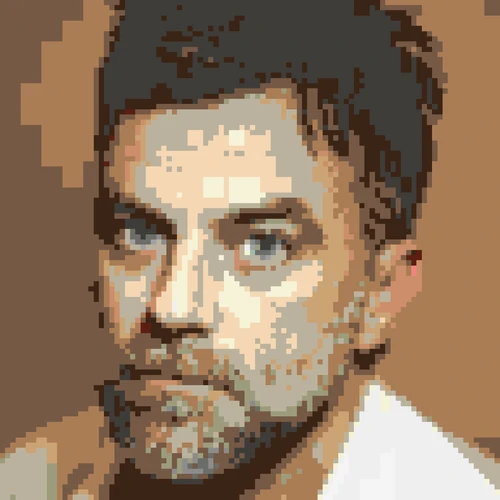
Réalisateur, scénariste et producteur américain né le 26 juin 1970 à Studio City, en Californie, Paul Thomas Anderson s’est imposé comme l’un des auteurs les plus marquants du cinéma américain contemporain. Reconnu pour ses fresques chorales et ses portraits d’individus obsessionnels, il explore avec une ambition formelle constante des univers aussi variés que l’industrie pornographique, le pétrole ou la mode. Son travail, longtemps salué par la critique sans être récompensé par l’Académie, a finalement été couronné aux Oscars en 2026.
Fils d’un présentateur et doubleur travaillant à Hollywood, Paul Thomas Anderson grandit dans une fratrie nombreuse de la San Fernando Valley et reçoit sa première caméra à l’âge de douze ans, décidant très tôt de devenir cinéaste. Après de brefs passages à l’université, notamment à la New York University dont il est renvoyé à 23 ans faute d’avoir réglé ses frais d’inscription, il utilise cet argent pour financer son premier court métrage professionnel, Cigarettes and Coffee (1993), remarqué au festival de Sundance. Ce court métrage lui permet de réaliser son premier long métrage, le polar Hard Eight (1996, sorti sous le titre Double Mise en France). C’est toutefois avec Boogie Nights (1997), plongée dans le cinéma pornographique californien de la fin des années 1970, qu’il se fait véritablement remarquer, obtenant plusieurs nominations aux Oscars, dont celle du meilleur scénario, et suscitant des comparaisons avec Martin Scorsese et Robert Altman. Il confirme cette reconnaissance en 1999 avec Magnolia, fresque chorale ambitieuse dépassant les trois heures, puis explore des registres plus intimes avec Punch-Drunk Love (2002), porté par Adam Sandler. Sa carrière se poursuit avec des œuvres toujours plus personnelles, marquées par un contrôle créatif étendu au montage comme au choix des interprètes, et par des collaborations récurrentes avec des acteurs comme Philip Seymour Hoffman, Joaquin Phoenix ou Daniel Day-Lewis.
En 2007, There Will Be Blood, librement inspiré du roman Oil! d’Upton Sinclair, suit l’ascension d’un prospecteur de pétrole incarné par Daniel Day-Lewis et devient une référence du cinéma américain contemporain, portée par une mise en scène austère et une bande originale marquante. Anderson prolonge cette exploration des figures charismatiques et manipulatrices avec The Master (2012), consacré à la relation trouble entre un vétéran instable et un leader spirituel, puis avec Inherent Vice (2014), adaptation du roman de Thomas Pynchon. En 2017, Phantom Thread, dernier rôle de Daniel Day-Lewis avant sa retraite annoncée, explore l’univers de la haute couture londonienne et lui vaut des nominations aux Oscars du meilleur film et du meilleur réalisateur. En 2021, Licorice Pizza, chronique nostalgique de la San Fernando Valley des années 1970, obtient trois nominations aux Oscars, dont meilleur film, meilleur réalisateur et meilleur scénario original. En 2025, Une bataille après l’autre marque l’aboutissement de cette reconnaissance : nommé à treize Oscars, le film remporte notamment les prix du meilleur film, du meilleur réalisateur et du meilleur scénario adapté lors de la cérémonie de 2026, offrant à Anderson ses premières statuettes après onze nominations infructueuses. Cette consécration, obtenue après près de trente ans de carrière saluée par la critique mais longtemps snobée par l’Académie, confirme son statut de cinéaste majeur de sa génération.
Paul Thomas Anderson is an American director, screenwriter, and producer born on June 26, 1970, in Studio City, California. He has established himself as one of the most significant auteurs in contemporary American cinema, known for his sprawling ensemble narratives and portraits of obsessive individuals. With unwavering formal ambition, he has explored settings as varied as the pornography industry, the oil business, and the fashion world. His work, long celebrated by critics yet overlooked by the Academy, was finally honored at the 2026 Oscars.
The son of a Hollywood television presenter and voice actor, Paul Thomas Anderson grew up in a large family in the San Fernando Valley and received his first camera at age twelve, deciding early on to become a filmmaker. After brief stints in college, including at New York University, from which he was expelled at 23 for failing to pay his admission fees, he used that money to finance his first professional short film, Cigarettes and Coffee (1993), which drew attention at the Sundance Film Festival. This short led to his feature debut, the crime drama Hard Eight (1996). It was Boogie Nights (1997), however, an immersion into California’s pornography industry in the late 1970s, that truly brought him to prominence, earning several Oscar nominations, including for Best Screenplay, and drawing comparisons to Martin Scorsese and Robert Altman. He cemented this reputation in 1999 with Magnolia, an ambitious ensemble piece running over three hours, before turning to more intimate territory with Punch-Drunk Love (2002), starring Adam Sandler. His career continued with increasingly personal work, marked by extensive creative control over editing and casting, and by recurring collaborations with actors such as Philip Seymour Hoffman, Joaquin Phoenix, and Daniel Day-Lewis.
In 2007, There Will Be Blood, loosely based on Upton Sinclair’s novel Oil!, follows the rise of an oil prospector played by Daniel Day-Lewis and became a landmark of contemporary American cinema, distinguished by its austere direction and striking score. Anderson continued exploring charismatic, manipulative figures with The Master (2012), centered on the troubled relationship between an unstable veteran and a spiritual leader, followed by Inherent Vice (2014), an adaptation of Thomas Pynchon’s novel. In 2017, Phantom Thread, Daniel Day-Lewis’s final role before his announced retirement, delved into the world of London haute couture and earned Anderson Oscar nominations for Best Picture and Best Director. In 2021, Licorice Pizza, a nostalgic chronicle of the 1970s San Fernando Valley, received three Oscar nominations, including Best Picture, Best Director, and Best Original Screenplay. In 2025, One Battle After Another marked the culmination of this recognition: nominated for thirteen Oscars, the film went on to win Best Picture, Best Director, and Best Adapted Screenplay at the 2026 ceremony, giving Anderson his first Academy Awards after eleven previous unsuccessful nominations. This crowning achievement, arriving after nearly three decades of critically acclaimed but long-snubbed work, confirms his status as a defining filmmaker of his generation.