
- The Terror of Tinytown
- Clean As A Thistle
- New Feudalism
- Panic Land
- Electronic Plantation
- Three Strikes
- Strength Thru Shopping
- Pets Eat Their Master
- I Won’t Give Up (contient une piste cachée)
The Audacity of Hype est un album du chanteur et activiste américain Jello Biafra, ancien leader des Dead Kennedys, publié le 20 octobre 2009 sur son propre label Alternative Tentacles. Premier disque du groupe Jello Biafra and the Guantanamo School of Medicine, formé avec des musiciens issus de la scène punk et rock américaine, il s’inscrit dans un registre hardcore punk résolument politique. Le titre de l’album parodie l’ouvrage The Audacity of Hope de Barack Obama. La pochette est signée par l’artiste visuel Shepard Fairey, connu pour son affiche Hope réalisée lors de la campagne présidentielle de 2008.
The Audacity of Hype constitue le premier album studio du groupe Jello Biafra and the Guantanamo School of Medicine, formé par le chanteur autour de Ralph Spight, Jon Weiss, Billy Gould, bassiste de Faith No More, et Kimo Ball. L’enregistrement et le mixage se déroulent aux studios Prairie Sun, à Cotati en Californie, ainsi qu’au Tape Vault de San Francisco, l’ensemble étant produit par Jello Biafra lui-même. Plusieurs morceaux de l’album trouvent leur origine dans des collaborations antérieures : New Feudalism et Electronic Plantation avaient déjà été interprétés par le projet The No WTO Combo, formé autour de Jello Biafra à l’occasion des manifestations contre l’OMC à Seattle en 1999, tandis qu’Electronic Plantation, Panic Land et Three Strikes proviennent d’une collaboration inédite avec le groupe britannique The Heads. L’album, publié sur le label indépendant Alternative Tentacles, fondé par Jello Biafra lui-même, paraît le 20 octobre 2009, quelques mois après le début du mandat présidentiel de Barack Obama, contexte auquel le titre de l’album fait directement référence sur un mode ironique.
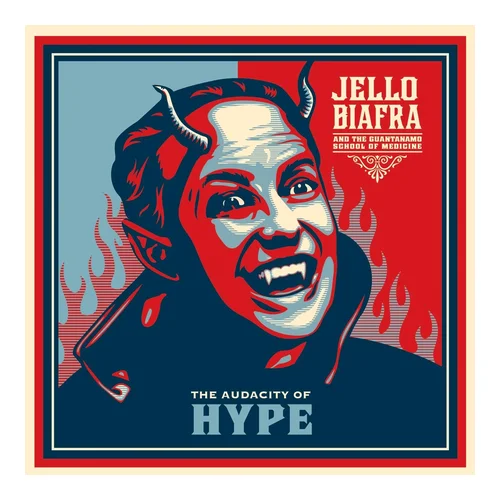
Musicalement, The Audacity of Hype s’inscrit dans la continuité du hardcore punk associé à Jello Biafra depuis ses débuts avec les Dead Kennedys, porté par un chant reconnaissable et des textes ouvertement politiques, mêlant satire sociale et critique du système économique et sécuritaire américain. Le disque alterne morceaux rapides et incisifs, comme Clean As A Thistle ou Strength Thru Shopping, ce dernier portant une critique explicite du consumérisme, et compositions plus longues et expérimentales, à l’image du morceau de clôture I Won’t Give Up, qui dissimule après plusieurs minutes de silence une piste cachée superposant l’ensemble des thèmes musicaux de l’album. Sur le plan visuel, la pochette réalisée par Shepard Fairey s’inscrit dans l’esthétique graphique caractéristique de l’artiste, marquée par des aplats de couleurs contrastées et une iconographie inspirée du pochoir et de l’affiche militante, en cohérence avec le positionnement politique revendiqué par Jello Biafra tout au long de sa carrière. Cette collaboration entre le musicien et l’un des artistes visuels les plus identifiés à l’imagerie contestataire américaine des années 2000 renforce la dimension satirique et engagée du projet dès sa présentation graphique.
À sa sortie, The Audacity of Hype reçoit un accueil globalement positif de la part de la presse spécialisée dans le rock et le punk, saluant la vitalité de l’interprétation de Jello Biafra et de son nouveau groupe, notamment dans des publications telles qu’Alternative Press ou The Aquarian Weekly, qui lui attribue la note de B+. Le site spécialisé Punknews.org évoque également l’album de manière favorable, le comparant à certaines collaborations antérieures de l’artiste, notamment avec le groupe canadien D.O.A. L’album est distribué en plusieurs formats, dont une édition vinyle avec livret photo et poster de paroles, ainsi qu’une réédition en CD en 2010. Il contribue à prolonger la carrière post-Dead Kennedys de Jello Biafra, en réaffirmant sa position de figure critique du paysage politique et médiatique américain, tout en associant son propos musical à l’identité visuelle forte apportée par Shepard Fairey.
The Audacity of Hype is an album by American singer and activist Jello Biafra, former frontman of the Dead Kennedys, released on 20 October 2009 on his own label Alternative Tentacles. The debut record by the band Jello Biafra and the Guantanamo School of Medicine, formed with musicians from the American punk and rock scene, it sits within a resolutely political hardcore punk register. The album’s title parodies Barack Obama’s book The Audacity of Hope. The cover art is by visual artist Shepard Fairey, known for his Hope poster created during the 2008 presidential campaign.
The Audacity of Hype is the debut studio album by the band Jello Biafra and the Guantanamo School of Medicine, formed by the singer alongside Ralph Spight, Jon Weiss, Billy Gould, bassist of Faith No More, and Kimo Ball. Recording and mixing took place at Prairie Sun Studios in Cotati, California, as well as at the Tape Vault in San Francisco, with the whole album produced by Jello Biafra himself. Several tracks on the album originate from earlier collaborations: New Feudalism and Electronic Plantation had already been performed by the project The No WTO Combo, formed around Jello Biafra for the 1999 anti-WTO protests in Seattle, while Electronic Plantation, Panic Land and Three Strikes come from an unreleased collaboration with the British band The Heads. The album, released on the independent label Alternative Tentacles, founded by Jello Biafra himself, came out on 20 October 2009, a few months into Barack Obama’s presidency, a context to which the album’s title directly and ironically refers.
Musically, The Audacity of Hype continues the hardcore punk sound associated with Jello Biafra since his Dead Kennedys days, carried by his recognizable vocals and openly political lyrics, blending social satire with criticism of the American economic and security system. The record alternates fast, incisive tracks, such as Clean As A Thistle and Strength Thru Shopping, the latter explicitly criticizing consumerism, with longer, more experimental compositions, such as the closing track I Won’t Give Up, which conceals a hidden track after several minutes of silence, layering all of the album’s musical themes on top of one another. Visually, the cover art created by Shepard Fairey reflects the artist’s characteristic graphic style, marked by contrasting flat colors and an iconography inspired by stencil art and protest posters, in keeping with the political stance Jello Biafra has maintained throughout his career. This collaboration between the musician and one of the visual artists most closely identified with American protest imagery of the 2000s reinforces the project’s satirical and engaged dimension from its very cover art.
Upon release, The Audacity of Hype received a generally positive reception from the rock and punk specialist press, which praised the vitality of Jello Biafra’s performance with his new band, notably in publications such as Alternative Press and The Aquarian Weekly, which gave it a B+ rating. The specialist website Punknews.org also reviewed the album favorably, comparing it to some of the artist’s earlier collaborations, notably with the Canadian band D.O.A. The album was released in several formats, including a vinyl edition with a photo booklet and a lyrics poster, as well as a CD reissue in 2010. It helped extend Jello Biafra’s post-Dead Kennedys career, reaffirming his position as a critical voice within the American political and media landscape, while pairing his musical statement with the strong visual identity provided by Shepard Fairey.