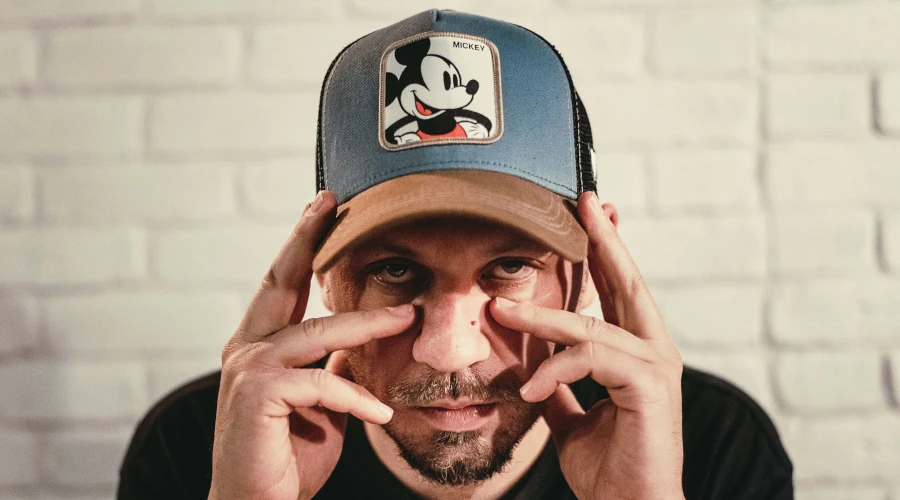
Dooz Kawa, de son vrai nom Frank Latreille-Ladoux, né le 8 janvier 1980 à Chartres et décédé le 19 décembre 2025 à Marseille à l’âge de 45 ans, était un rappeur français d’origine allemande et tchécoslovaque, figure singulière et respectée du rap underground hexagonal. Surnommé la « plume du rap français » par Le Figaro, il a construit sur plus de vingt ans une œuvre exigeante et poétique, ancrée dans la tradition du rap à textes, portée par des instrumentaux mêlant jazz manouche et musiques d’Europe de l’Est.
Farouchement indépendant, discret et littéraire, il a été invité à Sciences Po et à l’École normale supérieure pour parler de son art, témoignage d’une reconnaissance institutionnelle rare dans le milieu rap. Son décès a suscité une vague d’hommages unanimes dans toute la scène francophone.
Parcours et contexte musical
C’est dans les garnisons militaires allemandes où son père était soldat que Frank Latreille-Ladoux découvre le rap dès l’âge de douze ans, dans des caves où circule une scène underground franco-américaine. À seize ans, il débarque à Strasbourg et s’installe dans le quartier de la cité Ampère, l’un des plus populaires de la ville, au contact de la communauté tzigane — rencontre fondatrice qui marquera durablement son esthétique musicale.
C’est là qu’il compose ses premiers textes et co-fonde avec le rappeur Raid N le collectif T-Kaï Cee, avec lequel il écume les scènes locales alsaciennes. Le groupe devient rapidement une référence dans le milieu rap strasbourgeois, bien que son écriture — jugée trop linéaire et particulière — le place d’emblée à part dans la scène locale.
Dans les années 2000, T-Kaï Cee publie un street album qui circule de main en main. En 2006, Dooz Kawa rencontre le guitariste manouche Biréli Lagrène, collaboration décisive qui oriente son univers sonore vers des territoires hybrides. Son premier album solo, Étoiles du sol, paraît en 2010, suivi de Message aux Anges Noirs (2012) et des EP Narcozik #1 (2013) et Narcozik #2 (2014), publiés via sa structure Narcozic Society. Bohemian Rap Story (2016) marque un tournant reconnu par la presse spécialisée, suivi de Contes Cruels (2017) avec le rappeur Jeff Le Nerf.
En 2016, son titre Me Faire la Belle dépasse les 15 millions de streams sur Spotify. Nomad’s Land (2020) et Vol de nuit (2024), son dernier album, concluent une discographie cohérente et indépendante publiée chez Modulor France. En 2022, il fonde l’association Étoiles du Sol pour la prévention des violences dans l’enfance, prolongeant hors de la musique un engagement humain constant.
Style, influences et esthétique sonore
L’esthétique de Dooz Kawa repose sur une tension fondatrice entre la rugosité du rap underground et une poésie littéraire sophistiquée, que la presse spécialisée situe dans le sillage d’artistes comme Davodka, Lucio Bukowski, Demi Portion ou Kacem Wapalek — cette génération d’écrivains du rap qui n’ont jamais opposé exigence formelle et culture populaire. Ses textes, denses et ciselés, jouent sur des images mélancoliques, des références philosophiques et une sincérité radicale, dans une langue française travaillée que des enseignants de l’École normale supérieure ont qualifié de légitime objet d’étude littéraire.
Son identité sonore se distingue par un goût prononcé pour des instrumentaux organiques mêlant jazz manouche, musiques d’Europe de l’Est et arrangements classiques — héritage direct de son adolescence au contact de la communauté tzigane strasbourgeoise et de ses collaborations avec les guitaristes manouches Biréli Lagrène et Mandino Reinhardt. Cette hybridation entre hip-hop et traditions musicales européennes constitue l’une des marques de fabrique les plus immédiatement reconnaissables de son œuvre, résumée par sa propre formule : il n’existe pas de frontière entre les esthétiques musicales, il faut seulement des passeurs pour les relier.
Ses influences déclarées s’ancrent dans le rap français des années 1990 — La Cliqua, Passi — dont il se revendique héritier critique, sans nostalgie creuse. Bohemian Rap Story (2016) illustre cette capacité à regarder vers les Balkans sans folklore décoratif, tandis que Contes Cruels (2017) confirme la maturité d’un auteur pour qui le rap reste avant tout un espace de littérature orale. La presse le décrit comme un artiste torturé, grand lecteur, traitant les sujets en profondeur et fidèle à ses valeurs — portrait cohérent d’une œuvre construite loin de toute logique commerciale.
Discographie, scènes et réception
La discographie de Dooz Kawa s’étend sur quinze ans de productions indépendantes et exigeantes. Après les fondations collectives avec T-Kaï Cee, son premier album solo Étoiles du sol (2010) ouvre un territoire singulier, suivi de Message aux Anges Noirs (2012) et de la série des EP Narcozik (2013, 2014, 2024), publiés via sa propre structure Narcozic Society. Bohemian Rap Story (2016) marque le tournant critique de sa carrière, salué par la presse spécialisée comme son œuvre la plus aboutie, ancré dans un imaginaire balkanique rugueux et lucide.
La même année, Me Faire la Belle dépasse les 15 millions de streams sur Spotify — performance remarquable pour un artiste underground indépendant. Contes Cruels (2017), Nomad’s Land (2020) et Vol de nuit (2024) complètent une discographie cohérente, publiée chez Modulor France, où chaque projet prolonge et approfondit le même univers poétique de Dooz Kawa.
Sur scène, Dooz Kawa s’est produit dans des salles et festivals du circuit underground francophone, dont le Moulin à Marseille en 2020 lors de la tournée de Nomad’s Land. Il a également enseigné des ateliers d’écriture poétique dans des conservatoires et participé à des séminaires à Sciences Po et à l’École normale supérieure, où la valeur littéraire de son œuvre a été explicitement reconnue. Le Figaro l’a désigné comme la plume du rap français en 2019.
Le décès de Dooz Kawa le 19 décembre 2025 à Marseille a suscité une vague d’hommages unanimes dans toute la scène francophone. La presse spécialisée souligne la perte d’une voix irremplaçable dans le paysage du rap à textes français, aux côtés de figures comme Davodka ou Swift Guad, avec lesquels Dooz Kawa partageait des valeurs d’indépendance et d’exigence artistique.
FAQ
- D’où vient le nom de scène Dooz Kawa ? Le nom se compose de deux éléments distincts. Dooz évoque le nombre 12 et a été choisi pour son double « o », adapté au style des tags. Kawa provient des initiales K.W.A — King With Attitude —, référence à un nom attribué à des garnisons allemandes, mais aussi au groupe américain N.W.A.
- Quel est le titre de Dooz Kawa le plus écouté en streaming ? Me Faire la Belle, sorti en 2016, est son titre le plus diffusé, avec plus de 15 millions de streams sur Spotify — performance notable pour un artiste issu du rap underground indépendant français.
- Dooz Kawa a-t-il exercé des activités en dehors de la musique ? Oui. En 2022, Dooz Kawa co-fonde l’association Étoiles du Sol avec Samantha Al Joboory, dédiée à la prévention des violences dans l’enfance et à la sensibilisation au respect du vivant. Il a également travaillé comme soignant en parallèle de sa carrière musicale, et donné des ateliers d’écriture poétique dans des conservatoires.