
- Intro
- Get into the Music
- Gym Tonic
- Disco 2000 Selector
- My Only Love
- Paradise Interlude
- The Ghetto
- New York City Music
- Ultimate Funk
- Move Your Body
- Souvenir
- Vision of Paradise
- Mo Underground People
- Gym Tonic (Sounds Of Life Remix)
- My Only Love (Erick Morillo Remix)
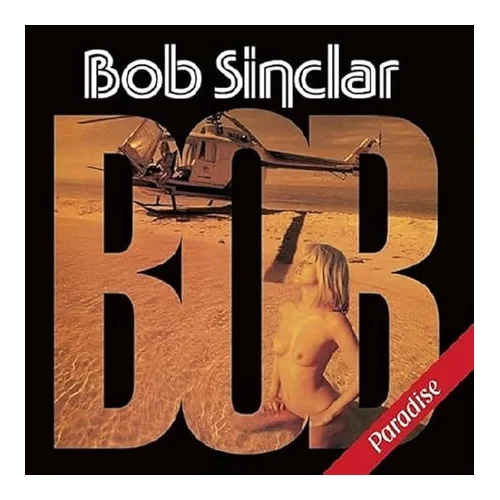
Paradise est le premier album studio du DJ et producteur français Bob Sinclar, de son vrai nom Christophe Le Friant, sorti en 1998 sur le label parisien Yellow Productions. Conçu dans la mouvance naissante de la French Touch, l’album mêle house, disco et funk à partir d’un important travail d’échantillonnage. D’abord accueilli sans grand succès commercial, Paradise doit sa notoriété rétrospective au morceau Gym Tonic, coproduit avec Thomas Bangalter, qui deviendra l’un des titres les plus marquants de la scène house française de la fin des années 1990.
Paradise est publié en 1998 sur Yellow Productions, le label parisien cofondé par Bob Sinclar et DJ Yellow en 1994, sur lequel l’artiste s’était fait connaître sous plusieurs pseudonymes, dont The Mighty Bop et Chris the French Kiss. L’album reprend plusieurs morceaux déjà diffusés en club par Bob Sinclar, comme Disco 2000 Selector, Vision of Paradise ou My Only Love, aux côtés de titres inédits. Sa genèse est marquée par l’histoire, largement documentée mais parfois contradictoire selon les sources, du morceau Gym Tonic : produit par Thomas Bangalter, alors membre de Daft Punk, à l’origine sans intention de sortie commerciale, le titre est finalement intégré à l’album à la demande de Bob Sinclar après un accueil enthousiaste en club. Le morceau utilise notamment un extrait vocal du disque d’exercice de Jane Fonda, dont l’usage non autorisé donnera lieu à une action en justice et à des frais de règlement estimés à environ 75 000 dollars. Selon le site Discogs, l’album ne rencontre à sa sortie qu’un succès commercial limité, avant que Gym Tonic ne s’impose progressivement comme le titre phare du disque.
Paradise s’inscrit dans l’esthétique French house de la fin des années 1990, marquée par un usage intensif du sampling disco, funk et soul, assemblé en boucles groovy et mélodiques. L’album alterne pistes énergiques destinées au dancefloor, telles que Get into the Music, Ultimate Funk ou Move Your Body, et morceaux plus atmosphériques comme Souvenir ou Paradise Interlude, qui ponctuent la tracklist à la manière d’interludes. Le morceau Gym Tonic, produit par Thomas Bangalter, illustre particulièrement cette approche : construit autour d’un sample vocal de Jane Fonda et de boucles funk empruntées à plusieurs disques des années 1970-1980, il adopte un groove minimal et répétitif caractéristique du son house parisien de l’époque. D’autres titres, comme New York City Music ou Vision of Paradise, puisent également dans un vaste répertoire de samples non crédités sur la pochette originale, une pratique alors courante dans la scène house et depuis partiellement documentée par des bases de données spécialisées.
Selon Wikipédia en français, Paradise ne rencontre pas le succès escompté lors de sa sortie et constitue, dans un premier temps, un échec commercial pour Bob Sinclar. La perception de l’album évolue toutefois rapidement grâce au morceau Gym Tonic, dont le succès en club conduit à sa sortie en single malgré la volonté initiale de Thomas Bangalter de ne pas l’associer à son nom. Le titre inspire par la suite plusieurs reprises et adaptations commerciales, dont le single Gym and Tonic du duo britannique Spacedust, sorti la même année. Sur les plateformes de streaming et bases de données collectionneurs, l’album continue aujourd’hui d’être identifié comme le premier disque de Bob Sinclar et comme l’un des jalons de la French house, davantage pour son rôle dans le lancement de la carrière de l’artiste et pour l’histoire mouvementée de Gym Tonic que pour sa performance commerciale d’origine. Bob Sinclar poursuivra sa carrière avec des albums ultérieurs, dont un hommage à Cerrone sorti en 2000, qui confirmeront sa place dans le paysage house français et international.
Paradise is the debut studio album by French DJ and producer Bob Sinclar, born Christophe Le Friant, released in 1998 on the Paris-based label Yellow Productions. Rooted in the emerging French Touch movement, the album blends house, disco and funk built on extensive sampling. Initially met with limited commercial success, Paradise owes its lasting reputation to the track Gym Tonic, co-produced with Thomas Bangalter, which went on to become one of the defining records of the late-1990s French house scene.
Paradise was released in 1998 on Yellow Productions, the Paris label co-founded by Bob Sinclar and DJ Yellow in 1994, on which the artist had already built a reputation under several aliases, including The Mighty Bop and Chris the French Kiss. The album gathers several tracks already circulating in clubs, such as Disco 2000 Selector, Vision of Paradise and My Only Love, alongside new material. Its backstory is shaped by the widely documented, if sometimes conflicting, history of the track Gym Tonic: produced by Thomas Bangalter, then a member of Daft Punk, initially with no intention of a commercial release, the track was ultimately added to the album at Bob Sinclar’s request after an enthusiastic club reception. The track notably uses a vocal sample from a Jane Fonda workout record, whose unauthorized use led to legal action and clearance costs estimated at around $75,000. According to Discogs, the album met with only limited commercial success on release, before Gym Tonic gradually established itself as the record’s standout track.
Paradise sits within the French house aesthetic of the late 1990s, marked by heavy use of disco, funk and soul sampling assembled into groovy, melodic loops. The album alternates high-energy dancefloor tracks such as Get into the Music, Ultimate Funk and Move Your Body with more atmospheric pieces like Souvenir and Paradise Interlude, which punctuate the tracklist as interludes. The track Gym Tonic, produced by Thomas Bangalter, exemplifies this approach particularly well: built around a Jane Fonda vocal sample and funk loops borrowed from several 1970s-80s records, it adopts the minimal, repetitive groove characteristic of the Parisian house sound of the era. Other tracks, such as New York City Music and Vision of Paradise, likewise draw on an extensive repertoire of samples left uncredited on the original sleeve, a common practice in the house scene at the time and since partially documented by specialized databases.
According to the French Wikipedia, Paradise did not achieve the expected success on release and initially amounted to a commercial disappointment for Bob Sinclar. Perception of the album shifted quickly, however, thanks to Gym Tonic, whose club success led to its release as a single despite Thomas Bangalter’s initial wish to keep his name off it. The track subsequently inspired several commercial covers and adaptations, including the British duo Spacedust’s single Gym and Tonic, released the same year. On streaming platforms and collector databases, the album is still identified today as Bob Sinclar’s debut record and as one of the milestones of French house, valued more for its role in launching the artist’s career and for the eventful story of Gym Tonic than for its original commercial performance. Bob Sinclar went on to release further albums, including a 2000 tribute to Cerrone, which cemented his place in the French and international house landscape.